Paperstery
Visit WebsiteSTACK
Next JS, TypeScript, Tailwind CSS, MongoDB, Prisma, Sentry
TYPE
Publishing Platform
STATUS
Completed
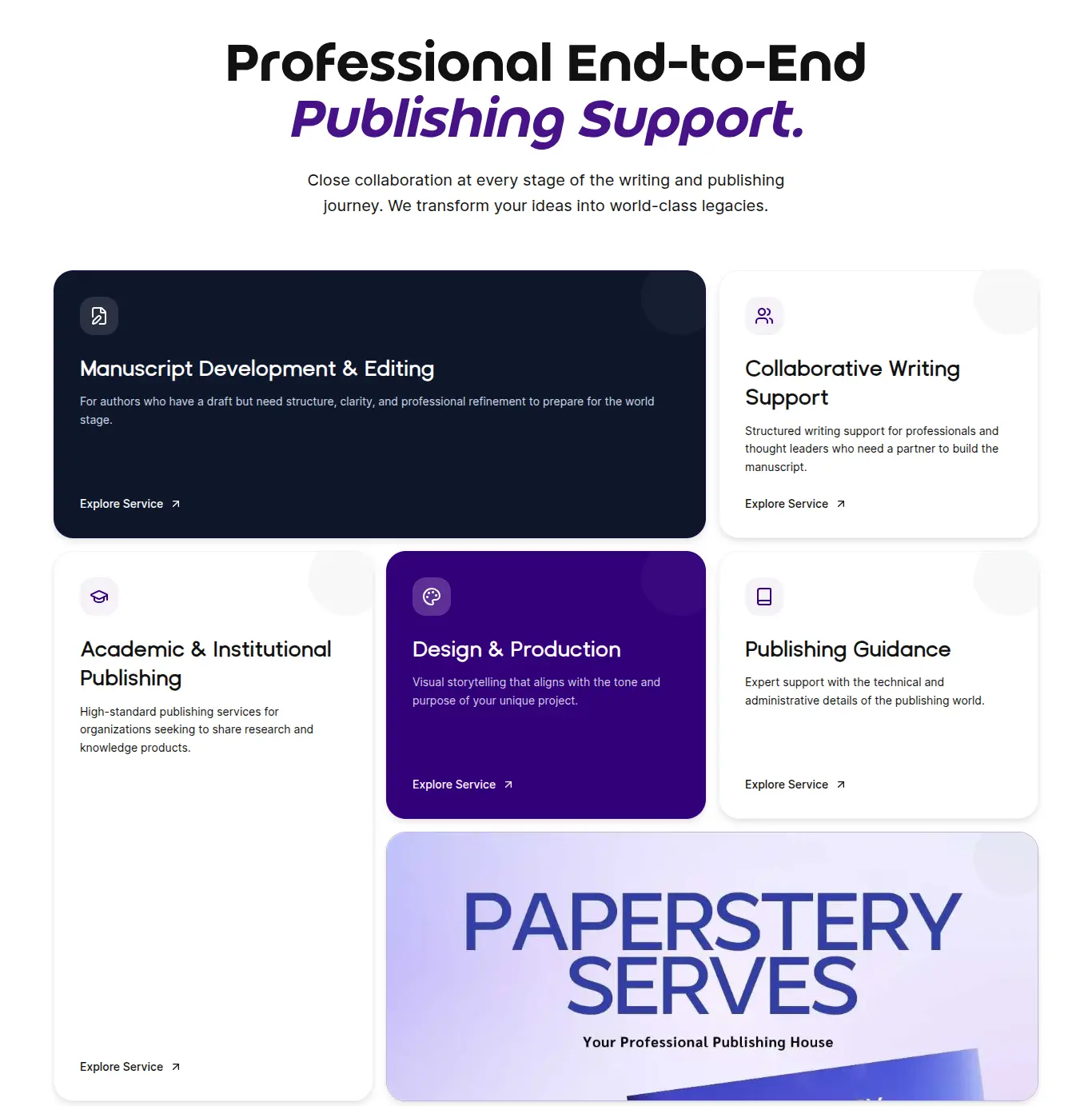
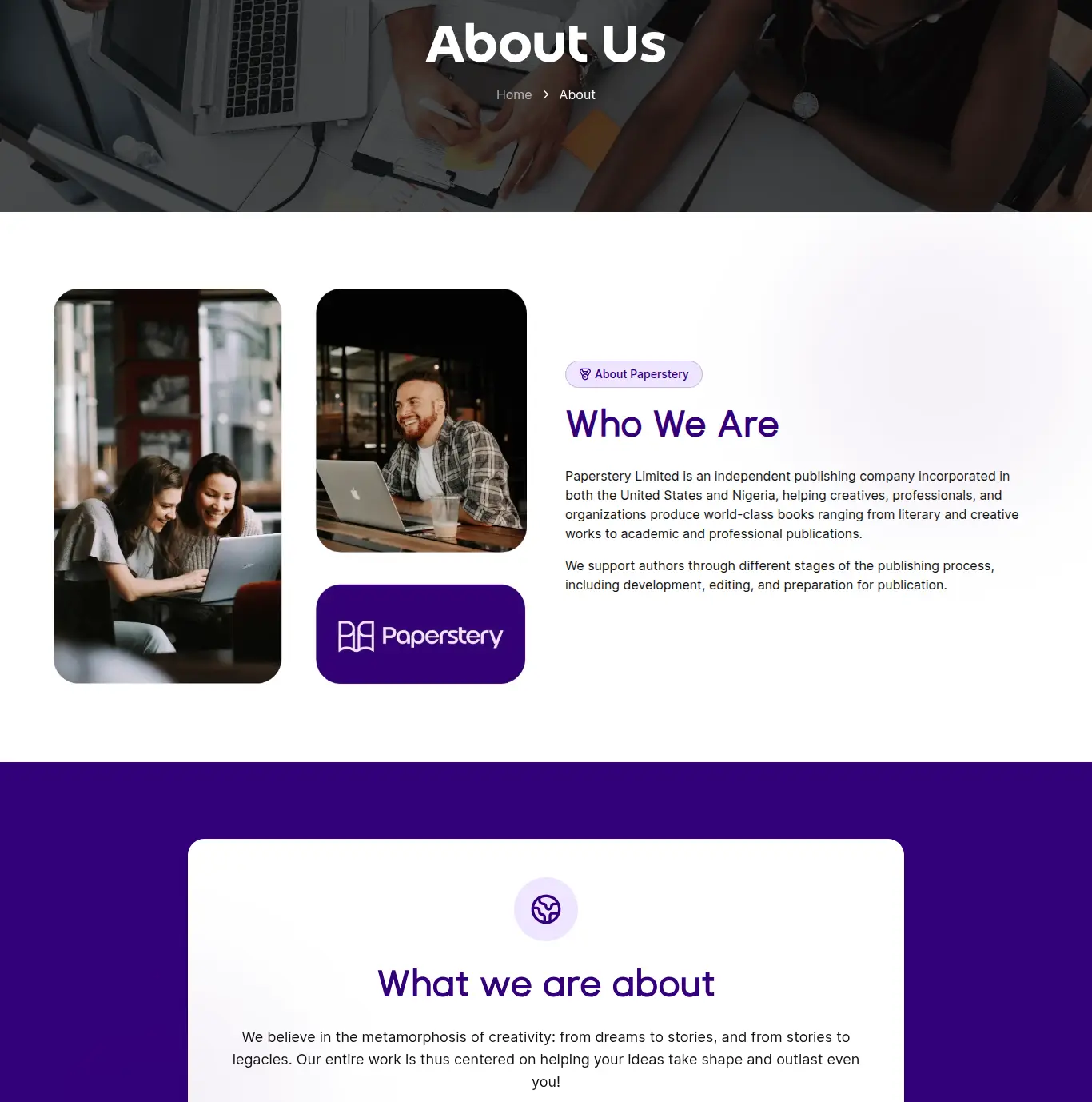
Paperstery is a full-stack web platform for an independent publishing house that helps authors transform manuscripts into professionally published books. Unlike a simple marketing site, the platform is database-driven, built with Next.js App Router, TypeScript, and MongoDB via Prisma, to support the full range of the company's digital operations. Key features include a manuscript submission flow where authors can submit their work directly through the platform, a blog for publishing guidance and company updates with a rich text editor in the admin blog creation panel for formatting posts, a newsletter subscriber system, and a contact/inquiry form for publishing consultations. An admin panel gives the Paperstery team the ability to manage incoming manuscript submissions through a manuscript review workflow, review and respond to inquiries, and maintain published content, consolidating what would otherwise require multiple separate tools into one unified interface. Sentry is integrated for production error tracking, ensuring the client's platform remains reliable.
GOALS
Paperstery was my first production project using Prisma with MongoDB (rather than a relational database), which expanded how I think about schema design for document-oriented data. Building a complete content management workflow for a real client, where the admin panel directly drives their daily operations, was a strong reminder that the backend tools I build have real human impact on the other side. Error monitoring via Sentry also became a habit I now apply to production projects by default.
CHALLENGES
Designing the Prisma schema over MongoDB to handle heterogeneous publishing projects, books, academic papers, collaborative writing, institutional publications, each with different metadata requirements, was a meaningful schema design challenge. Building the admin panel with appropriate role-based access and a clear manuscript review workflow also required careful thought, since the Paperstery team needed to process submissions efficiently without a technical background. Balancing a polished marketing presentation with a functional backend system, all within a single Next.js codebase, demanded disciplined code organization.